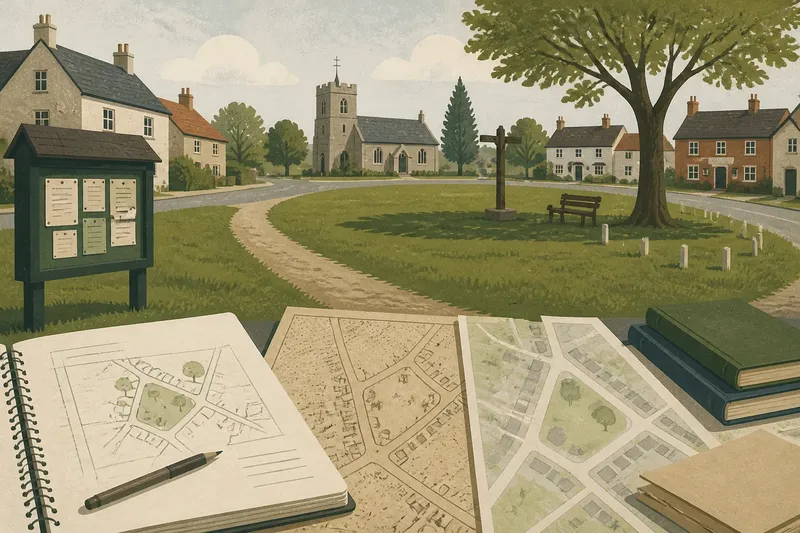
Stone, Brick or Timber: Reading a Building’s Outer Wall
Reading a building’s outer wall helps you describe its materials, patterns, joints and upkeep clearly, without guessing its age or origin.
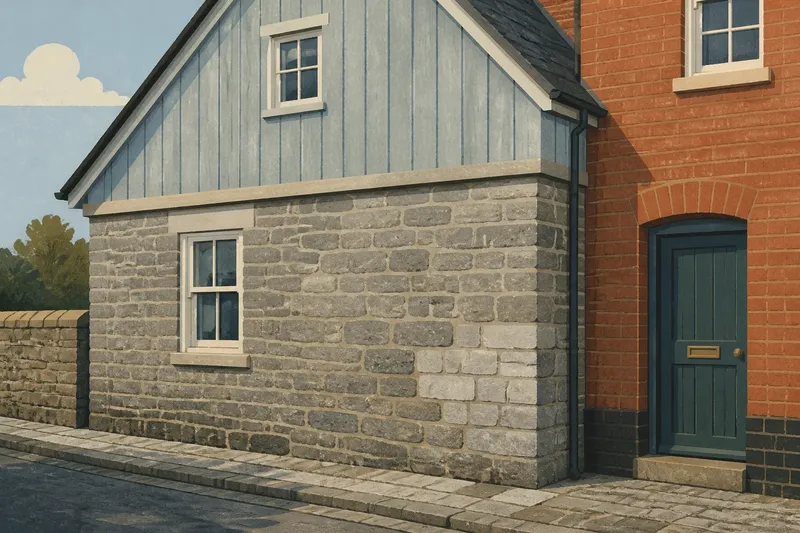
A pale wall catches the low light at the corner of a northern street, and its blocks seem almost blue beside a red-brick doorway. Reading a building’s outer wall begins with that kind of close observation: name the visible material, notice how it is arranged, and describe its condition before trying to explain it. A surface can offer plenty to see without revealing when or why it was built.
Start with the surface you can actually see
Step back far enough to take in the whole elevation, then move closer to inspect a small area. The broad view shows how materials are distributed; the close view reveals joints, grain, and repairs. If access is limited, observe from a public path and do not enter a yard or touch a wall without permission.
Use plain descriptions first. “Rough gray stone in uneven courses” is more useful than “old local stone” if you do not know where the material came from. A course is a horizontal layer of masonry. “Red brick with pale mortar and a darker base” records visible features without turning them into a claim about the building’s history.
- Note the main color, and whether it changes across the wall.
- Describe texture as smooth, granular, ridged, split, or irregular.
- Look for boundaries where one material meets another.
- Record repeated shapes, such as long blocks, small bricks, or upright boards.
- Separate what you observe from what you infer: “paint is peeling” is an observation; “the wall has been neglected” is an interpretation.
Stone shows variation through shape and joint
Stone walls are not a single visual category. Their stones may be squared into regular blocks, laid in uneven courses, or gathered into a varied pattern of large and small pieces. Look at the edges: crisp, straight lines suggest that pieces were shaped to fit closely, while irregular outlines leave more visible jointing between them. These are descriptions of workmanship and appearance, not a dependable way to date a building.
The joints can be as noticeable as the stone. Mortar may sit flush with the face, recede into the wall, or project slightly. Its color can make individual stones stand apart or blend them into a more continuous surface. A change in joint width, color, or finish may mark a repair or a change in construction, but the visible clue alone cannot establish when that work happened.
Weathering creates another layer of detail. A stone face may look smooth in one place and rough in another; sheltered areas can differ from corners exposed to wind and rain. Describe the location of the contrast rather than assigning it a cause you cannot verify. “The lower corner is darker and more mottled than the wall above” remains useful even when the reason is uncertain.
Brick turns repetition into a pattern
Brickwork invites the eye to follow its rows. A running bond, for example, has each brick’s vertical joint offset from the one below; other arrangements can align joints or create decorative bands. You do not need to name every bond pattern. Note whether rows are regular, whether bricks vary in shade, and whether headers or projecting courses create a visible accent.
Color is often uneven. One brick may be deep red, another brown or nearly purple, while pale mortar outlines the pattern. A single patch can differ because bricks or mortar were replaced, or because the surface has been altered. Record the contrast and its position before proposing an explanation.
Openings offer useful points of comparison. Look at how brickwork meets a window or doorway: the bricks may form a flat edge, a projecting sill, or a shallow arch. Compare that detail with another opening on the same elevation. Similar treatment can establish a repeated design feature; a difference is worth noting without assuming it marks a particular period or builder.
Timber makes grain, board direction, and finish visible
On a timber exterior, begin by looking at the direction of the boards. Horizontal siding produces long bands; vertical boards create a different rhythm and can make the wall seem taller. The board edges may overlap, meet flush, or be covered by narrow strips. Those distinctions help describe the construction without requiring a technical label.
Paint and stain change what the wood reveals. An opaque coat can hide the grain while making board edges and trim stand out. A more transparent finish leaves the grain visible, though sun and rain may have altered the color unevenly. Note where the finish is intact, faded, blistered, or missing, and whether the same condition continues around a corner.
Timber details can be easy to overlook beside a brightly painted facade. Check the corners, window surrounds, and meeting points between boards. A narrow vertical strip may cover a joint; a broad trim board may frame an opening. If boards are warped, split, or loose-looking, describe only what can be seen from a safe public place rather than touching or probing them.
Read transitions and repairs as part of the facade
Many walls combine materials. Stone may form a lower course beneath brick; timber boards may cover a gable while masonry continues below. A change can follow the building’s shape, mark an addition, or serve a practical purpose, but appearance alone cannot choose among those explanations. Describe where the transition occurs and whether it follows a floor line, corner, or roof edge.
Repairs are often visible as patches with a different color, texture, or joint width. A careful description says what differs and where: “A rectangular area of lighter mortar sits beside the rear window.” Avoid treating every mismatch as damage. It may be a repair, a deliberate finish, or a change in light across the surface.
Say you are looking at a fictional lane-side house with gray stone below and painted timber boards on its upper gable. You could note that the stone courses are irregular, the mortar appears pale, and the boards run vertically beneath the roof slope. If a patch near the corner has a different tone, record its position and appearance rather than calling it an original feature or assigning it an age.
What can a wall tell you, and what remains uncertain?
Can exterior material identify a building’s age?
Not by itself. Stone, brick, and timber have all been used across many building periods, and walls may be repaired, covered, or altered. Describe material and visible features first, and treat age as a separate question requiring reliable local records or expert assessment.
How can I describe a stone wall accurately?
Note the stones’ shape and size, how they are arranged, and whether the mortar is flush, recessed, or prominent. Add a clear detail about color or surface condition, such as “small pale stones in uneven rows with dark recessed joints.”
What should I look for in brickwork?
Follow the rows and notice the alignment of vertical joints, variations in brick color, and any bands or projecting courses. Then check how the pattern meets openings, corners, and visible repairs.
How do I describe a timber wall without guessing?
Record whether boards run horizontally or vertically, how their edges meet, and what the paint or stain conceals or reveals. Mention visible fading, peeling, or distortion by location, without claiming a cause you cannot confirm.
Keep upkeep notes separate from diagnosis
Visible condition can be recorded with ordinary terms: staining, flaking paint, cracked-looking mortar, a displaced board, or a darkened patch. The words describe appearance; they do not diagnose the cause or establish how serious it is. A photograph taken from a public place can help you compare the same area later, especially if you frame it with a corner, window, or other fixed feature so its location is clear.
Where a wall appears unstable or a loose piece could fall, keep clear and alert the owner or appropriate local authority rather than approaching it. For a building you own, questions about repair materials, heritage requirements, or structural condition call for a qualified building professional; the right choice can depend on the material, manufacturer’s instructions, and local rules.
When you next pause beside a northern street wall, try reading it in layers: material, arrangement, joint, surface, and change. Reading a building’s outer wall this way gives you precise language for what is present while leaving room for the parts the facade cannot tell you.